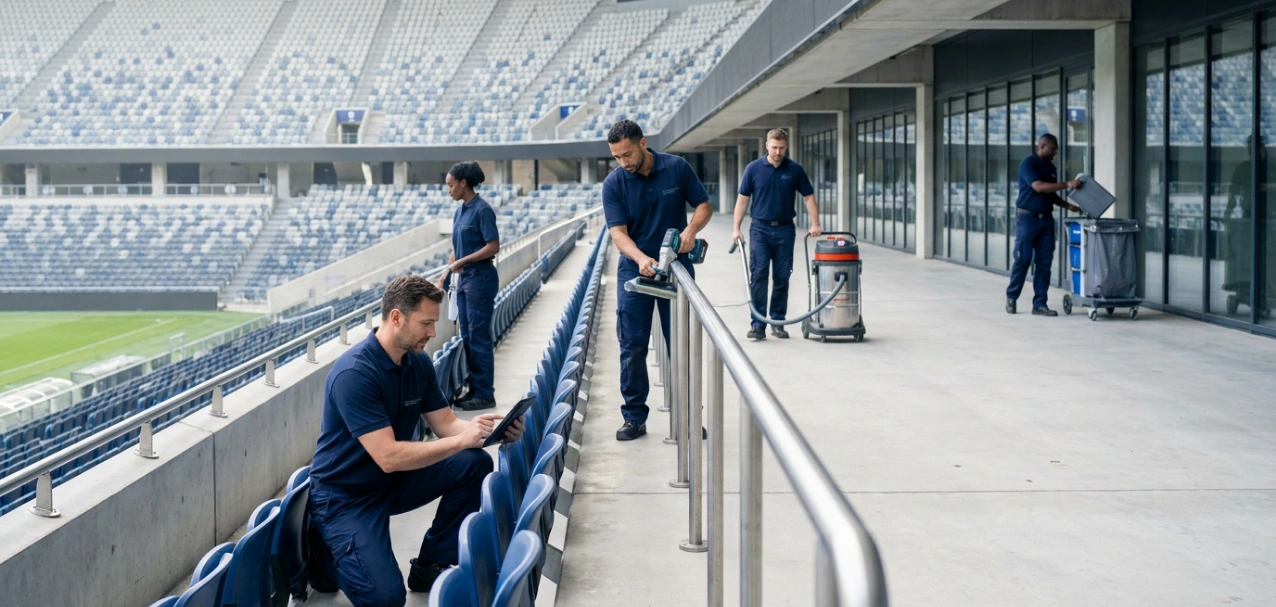
Why Non-Event Day Cleaning Is Where Risk Hides
Stadiums rarely fail on game night. They fail on the quiet Tuesday when no one is looking and non-event cleaning is under-resourced.
That is when spills dry into sticky films, food scraps sit in trays, and drains stay half-blocked until the next big bump of traffic. By the time the crowd is back in, the damage is already done and you are reacting instead of controlling risk.
From a facilities view, those quiet days are when you protect your health and safety position, your broadcast presentation, and your assets. This is especially true as winter codes roll through, finals build, and touring acts compress bump-in and bump-out windows across New Zealand venues.
What Fails When Non-Event Day Cleaning Slips
After a major event, you can get through a surface clean and still miss the real recovery work. In practice, the problems usually start in these areas:
- Seating bowls with food waste under seats and in cup holders
- Sticky concourses where drinks and fats have dried into a film
- Blocked or slow drains under bars and in toilet cores
Give that 24 to 72 hours and you are looking at odour, increased slip risk on polished concrete, and microbial activity you cannot see. Cleaners will scrub harder, but the surface is already compromised and coating life shortens.
High-value zones feel the impact quickly. Corporate suites, media boxes, and change rooms suffer when non-event detail is rushed or skipped.
Broadcast crews and sponsors notice specific defects:
- Finger marks on glass and stainless steel in camera lines
- Soil build-up in carpet edges and under seating banks
- Persistent smells in change rooms from missed drains and grout
Over time, small misses turn into asset problems and health and safety issues we see repeatedly in incident and maintenance reports. Typical examples include:
- Premature failure of floor coatings from sugary spills and acidic residues
- Corroded fittings in amenities from constant exposure to urine and harsh chemicals
- Mould growth in food and beverage back-of-house where moisture is never fully dried
- Manual handling risks as waste builds up in compactors, cages, and back docks
None of that happens on one big night. It creeps in across the non-event days when programmes are light and supervision is thin.
Hidden Compliance Gaps That Start on Quiet Days
Poor non-event day cleaning is not just a presentation issue, it connects directly into health and safety and public health duties. Stadium operators are working under the Health and Safety at Work Act 2015 and its regulations, with duties for safe access, plant, and systems of work, as well as food and public health legislation including the Food Act 2014.
In practical terms, that means you must manage slips, trips, manual handling, and exposure to biological hazards. You also have to maintain food premises, waste systems, and vermin control in line with council requirements and Food Standards Code obligations.
If concourses are greasy or algae is allowed to grow on external steps, you are increasing slip risk against health and safety requirements for safe means of access and egress. If waste is left in dock areas or stores, you are inviting pests and potentially blocking egress routes required by fire safety requirements and the Building Act 2004.
We often see paperwork gaps appear first on quiet days rather than on major events. Common examples include:
- Task analyses for pressure washing that do not match how work is actually done
- Missing or outdated SDS for cleaning chemicals used in food zones
- Old induction records for cleaning staff who now access plant rooms and roofs
For venues with ISO 9001 or ISO 14001 systems, inconsistent non-event routines show up clearly in audits. If the schedule says concourses are scrubbed twice weekly and data shows it is actually fortnightly, that becomes evidence in:
- Internal or external ISO surveillance audits
- Insurance assessments following incidents or weather events
- Regulator investigations after a fall, food complaint, or fire alarm issue
Your quality, environmental, and health and safety systems only work if the quiet days are controlled as tightly as event days and supported by accurate records.
Non-Event Stadium Cleaning Services That Actually Work
When stadium cleaning services are set up properly, the non-event programme is very clear and documented. In practice, competent FM teams look for three building blocks:
- Zoning of the site (seating bowls, concourses, amenities, corporate, back-of-house, roofs and external areas)
- Task and frequency matrices for each zone
- Clear separation between daily routines, weekly work, and deep cleans
Base-build tasks might include daily checks on amenities, food prep zones, and loading docks, with scheduled machine scrubbing on set days. Deep cleaning for seating bowls, high dusting, and pressure washing should be planned and not left as reactive work logged after complaints.
Seasonal adjustment is where many stadiums gain or lose control. Winter codes, finals periods, school holiday events, and pre-season tours all change usage patterns and soil load.
A practical schedule will include:
- Dark-day cleaning when the building is empty and access is best
- Rapid-turn protocols for back-to-back events with limited recovery windows
- Extra external attention after storms, strong winds, or heavy rain
Technology supports this if it is used properly and tied to KPIs. Useful tools include:
- Sensor-based bin monitoring in high-traffic zones to track true waste load
- ATP hygiene testing in food and player areas to validate cleaning quality
- Digital sign-off with time stamps and photo evidence for problem zones
When that data is fed back into your contract meetings, you can reconcile invoices, adjust SLAs, and prove whether agreed scopes are being met. It also gives you evidence for insurance and regulator questions after an incident.
Holding Contractors Accountable Between Events
Most contracts are written around event mode, but the real test of a stadium cleaning service is what happens in the gaps. Non-event performance measures should be specific and practical, for example:
- Response times to non-event work orders raised by FM or security
- Rectification rates for inspection defects on first return
- ATP thresholds in food areas and change rooms
- Slip incident and near-miss trends on concourses and stairs
Scopes, KPIs, and SLAs should clearly separate event cleaning from base-build cleaning. It helps to spell out in the contract:
- Inclusions and frequencies for seating bowls, amenity blocks, and concessions
- Coverage for back-of-house, docks, plant rooms, and staff areas
- Who owns what on non-event days versus event bump-out
To maintain consistency across a network of venues, many operators use structured assurance tools. Common levers include:
- Service credits tied to repeat defects or failed audits
- Structured joint inspections with agreed scoring tools
- Periodic independent inspections to benchmark multiple stadiums
The intent is to maintain a clear, evidence-based picture of mid-week standards rather than relying on event-day presentation.
Preparing for Finals, Tours, and Broadcast Scrutiny
As winter settles in and codes head towards finals, the calendar tightens. Super Rugby, NPC, and A-League fixtures collide with touring concerts, fan days, and corporate events, and cleaning teams are asked to do more in less time across wet and dirty conditions.
Non-event routines are your buffer against that pressure. If external steps are cleaned and checked through the week, winter rain and algae growth do not surprise you on game day.
If wind-driven debris in grandstands is removed on quiet days, you are not racing to clear bays before gates open. You also reduce trip hazards and improve the presentation of reserved seating areas.
Well-structured weekday habits support:
- Crowd safety on wet concourses and steep seating aisles
- TV presentation standards around player tunnels, camera lines, and concourses
- Sponsor activations that rely on clean, dry, and safe footprint areas
- Hospitality spend in bars and suites where odour and grime reduce dwell time
We see the best results where facility managers treat every non-event day as preparation for broadcast, tenants, and auditors, not just for the next crowd.
Turning Quiet Days Into a Competitive Advantage
Stadiums that tighten their non-event day cleaning see fewer incidents, better tenant feedback, longer coating life, and cleaner audits. That comes through in health and safety statistics, maintenance budgets, and contract performance reviews.
A simple starting checklist for facility managers and venue operators could include:
- Walk each public concourse and stair route the day after a minor event
- Inspect under seating rows, not just along the front edges
- Open plant room and dock doors and check for waste build-up and pests
- Review your cleaning task analyses, SDS, and induction records for currency
- Match your contractor’s non-event schedule against actual event load and seasons
Across New Zealand venues, the operators who treat quiet days as their main risk window achieve tighter health and safety outcomes, stronger broadcast presentation, and more manageable heavy-use periods. That is the standard non-event stadium cleaning services should be measured against.
Get Started With Your Project Today
If you are planning an upcoming event or need a reliable partner to maintain your venue, we can tailor our stadium cleaning services around your schedule and operational needs. At White Spot Group, we work closely with facility managers to deliver consistent, high-quality results that keep your stadium safe, clean and ready for crowds. Talk to our team today to discuss your requirements or request a quote via contact us.