Rethinking Industrial Floors as a Health and Safety Control
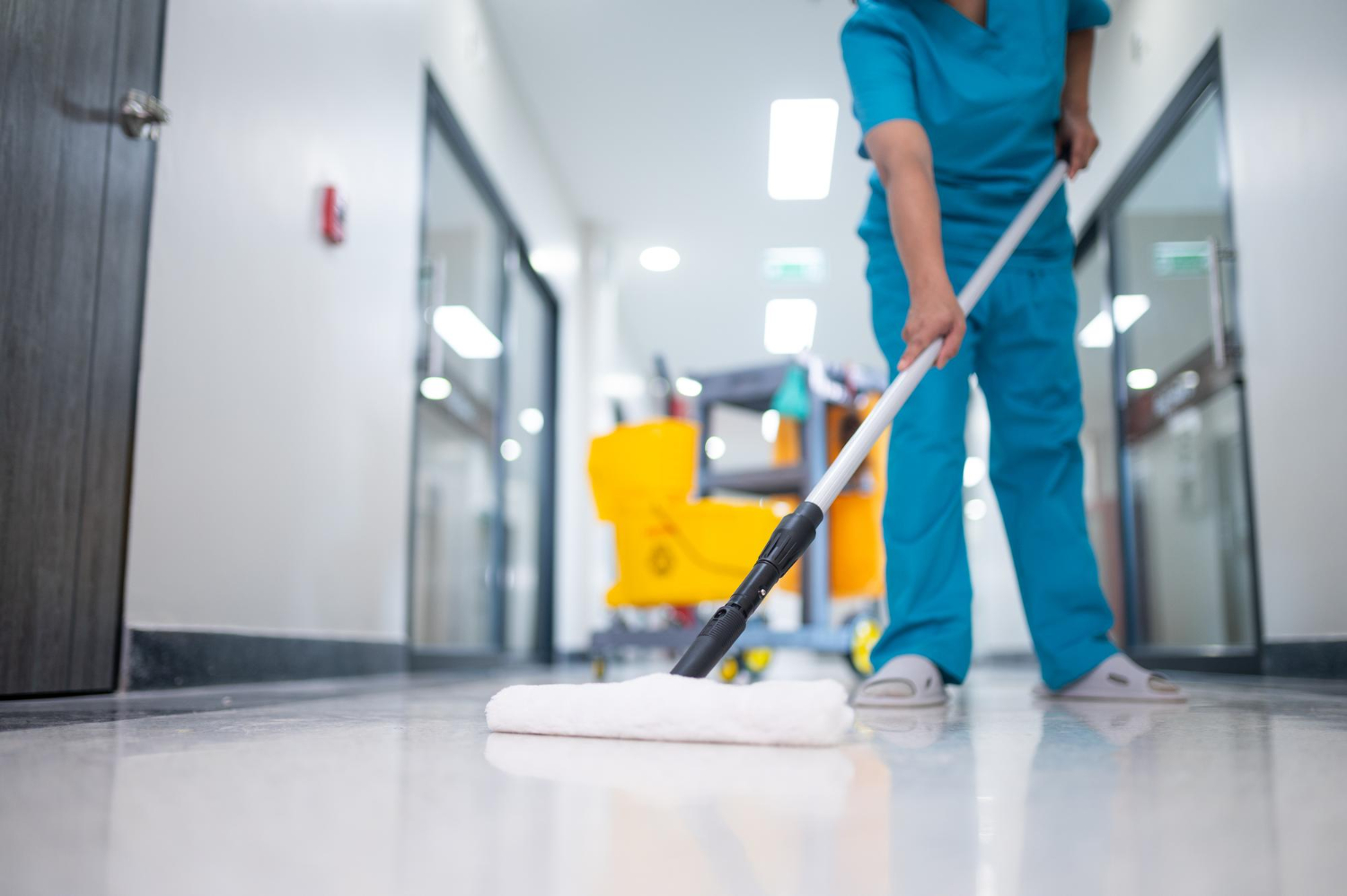
Industrial floor cleaning looks like housekeeping, but it behaves like engineering. On incident reports, floor failures usually appear as slips in coolant overspray, forklifts that cannot stop in time on dusty concrete, or pallet jacks shaking apart on broken epoxy joints.
On large industrial sites across New Zealand, floors carry a significant share of health and safety exposure, production risk and insurance scrutiny. Coolant overspray near CNC lines, grain dust in food plants, or plastic shavings in packaging halls all change friction, line-of-sight and braking distance.
Treating floors as an afterthought pushes a high-consequence risk into the cleaner’s workload without designing it as a control. At White Spot Group, we treat industrial floor cleaning as a control comparable to guarding, ventilation or traffic management, with clear design, documentation and review.
Common floor-related incident drivers include:
• Slips on oil and coolant overspray around production and maintenance bays
• Reduced forklift braking on dusty or powder-contaminated slabs
• Pallet jack vibration and load instability on damaged epoxy or spalled joints
Each of these drivers connects directly back to health and safety obligations under legislation and Standards, not just housekeeping expectations.
How Health and Safety Duties Connect to Industrial Floor Cleaning
Under the Health and Safety at Work Act 2015, a PCBU must provide and maintain a work environment without risks to health and safety, so far as is reasonably practicable. That duty explicitly includes safe access and egress, which incorporates floors, stairs, ramps and traffic routes.
WorkSafe New Zealand guidance on workplace facilities and on preventing slips, trips and falls identifies floors and traffic routes as key factors in controlling those risks. Industrial floor cleaning programmes sit within engineering and administrative controls when contaminants cannot be fully eliminated at the source.
Relevant contaminants include:
• Oils, coolants and hydraulic fluid leaks in workshops and heavy plant areas
• Silica and composite dust in fabrication and processing zones
• Metal swarf, shavings and offcuts around machining and assembly lines
• Food residues, blood, fats and brines in food processing or cold storage
• Mould and biofilm in wet-process, washdown or dock areas
These risks should be captured in task analyses and site risk registers, with clear references to the specific tasks and areas. That documentation should specify expected contaminants, the applied cleaning method, approved equipment and the verification checks used, such as floor slip-resistance tests or visual inspection criteria.
Independent certification frameworks such as ISO 45001 (occupational health and safety management systems) and ISO 9001 (quality management systems) provide structure for this integration. External auditors commonly test slip and trip controls by reviewing documented cleaning frequencies, suitability of methods for contaminants and substrates, and evidence of supervision and sign-off.
Poor evidence in these areas often aligns with inconsistent floor conditions and higher reported slip and trip incidents, which is visible in many audit histories and insurer risk reports. Aligning cleaning controls to these frameworks gives health, safety and operations teams verifiable records to reference.
Designing Cleaning Around Production Uptime
On live industrial sites, the most frequent complaint about floor cleaning is disruption to throughput. When cleaning is bolted on late in the planning process, it clashes with takt time, changeovers and maintenance windows.
When cleaning is scheduled and resourced as part of the production system, it becomes almost invisible and can support higher uptime. We start with production rhythm and constraint points and then overlay cleaning requirements.
Typical production patterns include:
• 24/7 distribution centres with narrow windows in outbound lanes
• Peak-season production runs in the lead-up to winter or promotional cycles
• Continuous process lines where unplanned stoppages are costly to recover
The floor plan is then zoned by risk and traffic type, for example:
• High-speed forklift aisles and crossovers
• Pedestrian walkways and shared forklift, pedestrian zones
• Loading docks, dock aprons and external hardstands
• Wet-process areas, wash bays and battery charge rooms
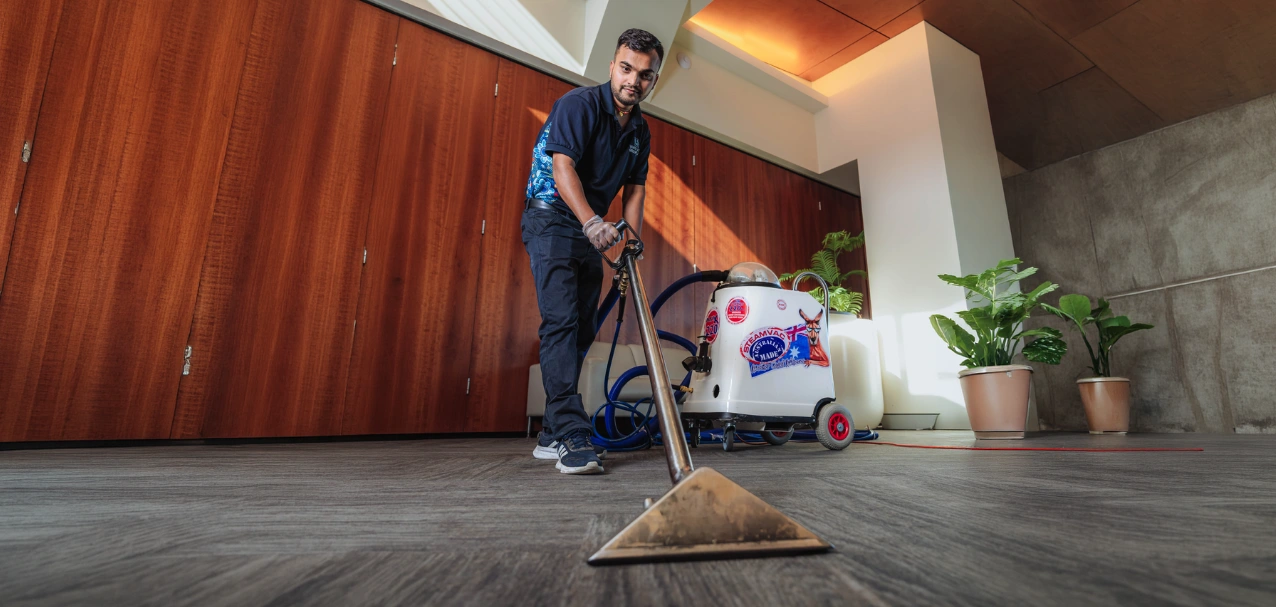
Each zone is matched with suitable equipment and method. A high-throughput pallet corridor may require a ride-on scrubber with integrated dust control to maintain friction and visibility.
Confined packing rooms often suit compact walk-behind units with low noise to meet exposure limits and shift work patterns. Dock and yard areas usually need squeegee and vacuum passes tied to delivery schedules and weather conditions.
Practical scheduling tactics that we implement on sites include:
• Micro-cleaning runs between changeovers on filling or packaging lines
• Night-shift or weekend deep cleans on heavy-traffic aisles and docks
• Scrubber fleets with telemetry so supervisors can review coverage, runtime and missed zones before hazards contribute to incidents
Handled this way, cleaning becomes a planned element of the production system rather than a cause of unplanned stoppages.
Selecting Plant and Chemicals for Industrial Floor Cleaning
Industrial floor cleaning equipment should be selected through a risk-based process similar to other plant procurement under health and safety regulations. Ride-on scrubbers, walk-behind units, sweepers and combination machines each suit particular floor types and risk profiles.
Some practical selection points include:
• Ride-on scrubbers: suited to large open slabs, long forklift aisles and distribution grids
• Walk-behind scrubbers: better for constrained production rooms and workstations
• Sweepers: effective for dry bulk dust, cardboard, pallet fragments and leaf litter
• Combination machines: useful where fine dust and wet contamination both occur routinely
Floor type significantly affects control effectiveness. Polished concrete, epoxy, tiled surfaces and external broom-finished slabs behave differently when wet or contaminated.
Incorrect brush type, pad or pressure can polish out texture, strip coatings or leave residues that reduce slip resistance. Many facility managers use AS/NZS 4586 slip-resistance testing to verify that cleaning methods do not compromise required friction levels.
Chemical selection needs the same discipline:
• Match pH and chemistry to the contaminant, for example alkaline degreasers for oils and neutral agents for most food-processing floors
• Respect dwell time and agitation requirements while avoiding extended wet periods during peak traffic
• Confirm compatibility with food-grade and allergen-control zones in line with HACCP plans and customer audit standards
• Comply with local trade waste consents, including capture, dilution and discharge controls as specified by your territorial authority
Health and safety controls must be built into the equipment layout and operation. That includes guarding around moving parts, designated battery charging bays with ventilation, rules for reversing alarms and beacons, noise exposure controls, and manual handling provisions for changing brushes, squeegees and chemical containers.
Managing Seasonal and Peak-Load Floor Risks
As autumn and early winter approach in many regions of New Zealand, floor risks typically increase. Rain events, leaf fall and darker yard conditions add variables on top of normal traffic and production.
Common seasonal issues include:
• Water ingress at loading docks and roller doors
• Leaf and organic debris at warehouse entries and external walkways
• Mud, soil and grit tracked in from yard areas and unsealed heavy-vehicle parks
• Reduced daylight in yard zones, which hides pooled water and slab defects
A practical response is to upscale industrial floor cleaning and grounds maintenance ahead of expected seasonal peaks. Many logistics and FMCG operators already plan additional resources in their pre-winter risk reviews and insurance surveys.
Actions often include:
• Additional sweeping of hardstands and yard routes used by forklifts and trucks
• Extra squeegee and scrubber passes near doorways and dock levellers on wet days
• More frequent inspection and clearing of trench drains, pits and sumps to prevent flooding
On logistics and FMCG-style sites preparing for stock builds, proactive cleaning around docks, staging lanes and racking fronts protects throughput by keeping traffic routes clear and dry. This reduces unplanned stoppages for cleanup, tyre damage or minor collision repairs linked to slippery or contaminated floors.
Maintenance teams can remain focused on planned work instead of urgent floor-related breakdowns, which is typically reflected in reduced reactive work orders in CMMS data.
Monitoring Performance and Treating Floors as Infrastructure
For industrial floor cleaning to function as a recognised health and safety control, it needs measurable evidence and feedback loops. That requires treating it with the same KPI and review discipline used for production and maintenance.
Useful indicators include:
• Slip, trip and low-speed collision incidents, and near-miss trends
• Floor friction or slip-resistance testing, especially in wet or critical zones
• Equipment utilisation reports that show coverage, runtime and idle periods
• Audit findings about housekeeping, access, egress and contamination
Digital sign-off, GPS-tagged tasks and photo verification can feed into ISO 45001- and ISO 9001-aligned systems. When an incident occurs, these records support investigations by showing what was cleaned, when and by which operator or contractor.
Corrective action workflows should connect floor defects to maintenance and capital planning. Examples include:
• Recurring oil or coolant leaks traced back to plant that must be repaired or redesigned
• Damaged slab joints or spalled areas logged into civil repair programmes and long-term capex plans
• Chemical residue issues leading to reviews of product choice, dilution, rinse processes or operator training
At White Spot Group, we treat floor systems and industrial floor cleaning programmes as core plant assets. They influence lost time injury frequency, product contamination risk, tyre and bearing wear, and the balance between planned shutdowns and emergency stoppages.
By treating floors as critical infrastructure, health and safety, production and finance teams gain a common platform to improve uptime and safety using evidence drawn from site data, audits and incident records.
Transform Your Floors With Professional Industrial Cleaning Today
Trust White Spot Group to restore safety, presentation and durability to your hard floors with our specialised industrial floor cleaning services. We tailor our approach to your facility, working around your operations to minimise disruption while delivering consistently high standards. If you are ready to improve the look and lifespan of your floors, contact us today to arrange an onsite assessment and quote.